
DIDM Batch 12-2

Website

Why Website Is Important In 2026

In 2026, having a professional website is no longer a luxury for businesses—it is a necessity. Whether you run a small local business, an e-commerce store, a startup, a consultancy, or a personal brand, your website can play a central role in building credibility, attracting customers, generating leads, and growing your business online. With customers spending more time researching businesses online before making purchasing decisions, a strong digital presence can make a significant difference. Social media platforms are useful for reaching audiences, but a website gives businesses a digital home that they own and control. Here are the key reasons why having a website is important in 2026. 1. A Website Builds Business Credibility One of the biggest reasons businesses need a website in 2026 is credibility. When potential customers hear about a company, one of the first things they may do is search for it online. A professional, informative website can create a positive first impression and make the business appear more established. A website allows you to clearly present: Without a website, potential customers may have difficulty finding reliable information about your business. 2. Customers Search Online Before Buying Consumer behavior has changed dramatically. People increasingly research products and services online before contacting a business or making a purchase. For example, someone looking for a local photographer might search for photographers in their area, visit different websites, compare portfolios, read reviews, and then contact the business they trust most. A website gives your business an opportunity to appear during this research process. This is why website development, SEO, and content marketing are important parts of a modern digital marketing strategy. 3. A Website Helps You Get Found on Google Search engines remain an important source of online discovery. A properly optimized website can target relevant keywords and topics related to your business. When people search for products, services, or information that you provide, your website can potentially appear in search results. For example, a web design company might create pages targeting terms such as: SEO is not simply about adding keywords. Search engines increasingly emphasize helpful, reliable, people-first content. Businesses should therefore focus on creating genuinely useful pages that satisfy users’ needs. 4. Your Website Works 24/7 Unlike a physical office or shop, your website can be available around the clock. A potential customer can visit your website at 2 AM, learn about your services, view your portfolio, read your blog, submit an inquiry, or even purchase a product. This makes a website a valuable business asset that continues working outside normal business hours. For online businesses especially, the website can become the primary place where customers discover, evaluate, and purchase products or services. 5. A Website Gives You More Control Than Social Media Social media is extremely useful, but businesses should not rely entirely on third-party platforms. Social media algorithms, policies, features, and audience behavior can change. Your reach can also depend on the platform’s algorithm. Your website gives you much greater control over your online presence. You decide: Social media should ideally complement your website rather than completely replace it. 6. A Website Can Generate Leads A well-designed website can work as a lead-generation machine. Businesses can use strategically placed calls-to-action such as: Get a Free Quote | Book a Consultation | Contact Us | Download the Guide | Start Your Free Trial You can also use contact forms, landing pages, newsletters, chat features, and lead magnets to collect potential customer inquiries. Instead of simply giving visitors information, your website can guide them toward taking the next step. 7. E-Commerce Websites Make Online Selling Easier For businesses selling products, having an e-commerce website can open the door to customers beyond their local area. An online store can allow customers to: This can create a convenient purchasing experience while allowing businesses to operate beyond traditional geographic boundaries. 8. A Website Strengthens Your Brand Your website is one of the most important places to communicate your brand identity. You can control your: A consistent website can help customers recognize and remember your business. In competitive markets, strong branding can be an important factor in helping a business stand apart from competitors. 9. Content and Websites Work Together A website provides a home for your content marketing strategy. Businesses can publish blog posts, guides, case studies, videos, FAQs, tutorials, and other resources that answer customers’ questions. For example, a digital marketing agency could publish an article titled “Why Website Is Important for Small Businesses in 2026.” That article can attract people searching for information about websites and potentially introduce them to the agency’s services. This creates a connection between SEO, content creation, website traffic, and lead generation. 10. Websites Are Becoming More Important in AI-Powered Search Another major reason websites matter in 2026 is the growth of AI-powered search and discovery. People increasingly use AI-powered tools to research businesses, products, services, and questions. Search engines are also incorporating generative AI experiences into how information is presented. Google’s guidance for AI features emphasizes the importance of valuable, unique, accessible content and continues to recommend following fundamental SEO practices. This means businesses should focus on maintaining a technically sound website with clear information and genuinely useful content. 11. A Website Helps You Compete With Larger Businesses A small business may not have the advertising budget of a large corporation, but a professionally designed website can help it compete for online attention. With the right combination of SEO, useful content, good user experience, and digital marketing, a small business can reach potential customers who may never have discovered it through traditional advertising. A website can therefore help level the playing field for businesses of different sizes. 12. A Professional Website Improves Customer Experience Customers want quick access to information. A good website should make it easy for visitors to find answers to questions such as: A fast, mobile-friendly, easy-to-navigate website can make the customer journey much smoother. Conclusion A website is important in 2026 because it acts as the foundation of
Canva

why content creation is important for online businesses in 2026

In 2026, having a website is no longer enough to succeed online. Businesses need to consistently communicate their value, answer customer questions, build trust, and stay visible across search engines, social media platforms, email, and AI-powered search experiences. This is where content creation becomes one of the most important parts of a successful digital marketing strategy. Whether you run an e-commerce store, SaaS company, personal brand, agency, local business, or online service, high-quality content can help you attract the right audience and turn visitors into loyal customers. The importance of content has become even greater as search continues to evolve. Google’s current guidance emphasizes helpful, reliable, people-first content and says that valuable, unique content can also help websites appear in generative AI features in Search. What Is Content Creation? Content creation is the process of producing useful and relevant material for a specific target audience. This can include: The goal isn’t simply to publish as much content as possible. In 2026, quality, relevance, originality, and usefulness matter more than publishing content just for the sake of having more pages. 1. Content Helps Businesses Increase Online Visibility One of the biggest benefits of content creation is improved online visibility. When potential customers search for information, problems, products, or services related to your business, useful content gives your brand opportunities to appear in front of them. For example, a digital marketing agency could publish articles such as: These articles can target relevant search queries while providing genuine value to potential customers. Google’s guidance specifically recommends creating content primarily to help people rather than creating pages solely to manipulate search rankings. 2. Content Supports SEO Search engine optimization (SEO) and content creation work closely together. Search engines need information to understand what your website is about. Well-structured content allows businesses to naturally target relevant topics, keywords, questions, and search intent. However, modern SEO is not simply about inserting keywords repeatedly into an article. Businesses should focus on creating comprehensive content that answers real questions and demonstrates knowledge and experience. Google’s current guidance encourages original information, research, analysis, and comprehensive coverage rather than shallow or repetitive material. This means an effective 2026 SEO strategy should combine: Keyword research + Search intent + Original insights + Useful information + Strong website structure + Consistent publishing 3. Content Builds Trust and Credibility Customers are more likely to buy from businesses they trust. Content gives you an opportunity to demonstrate your expertise before asking someone to purchase a product or service. For example, a financial consulting company can publish educational guides, while a software company can create tutorials and detailed product comparisons. Instead of simply saying, “We are experts,” valuable content allows a business to show its expertise. Google also highlights experience, expertise, authoritativeness, and trustworthiness as important concepts when evaluating helpful content. 4. Content Helps Generate Leads Content marketing can also become an important source of leads. Imagine someone discovers your blog while searching for a solution to a problem. After reading your article, they may: This creates a natural customer journey. Instead of aggressively advertising to people who may not be interested, content allows businesses to attract people who are already searching for information related to their products or services. 5. Content Supports AI-Powered Search in 2026 One of the biggest changes businesses need to understand in 2026 is the growth of AI-powered search. People increasingly use generative AI experiences to research products, compare solutions, ask questions, and discover information. Google has introduced specific guidance for optimizing websites for generative AI features and emphasizes valuable, unique, non-commodity content. This creates an important opportunity for businesses. Content that contains first-hand experience, original research, unique opinions, expert insights, examples, data, and useful explanations can provide more value than generic content that simply repeats information already available online. In other words, businesses should not ask only: “How can I rank on Google?” They should also ask: “How can I become a genuinely useful source of information in my industry?” 6. Content Makes Social Media Marketing More Effective Social media requires a constant stream of interesting and valuable material. A single long-form article can be transformed into multiple pieces of content, such as: This is known as content repurposing. For example, a business could write one 2,000-word guide and turn its key points into ten social media posts, three short videos, an infographic, and an email newsletter. This allows businesses to get significantly more value from their original content. 7. Content Helps Customers Make Buying Decisions Modern customers often research extensively before making a purchase. They may compare products, read reviews, watch videos, look for tutorials, and search for answers to specific questions. Businesses that provide this information can guide customers throughout the buying journey. Useful content can answer questions such as: The more helpful information you provide, the easier it can become for potential customers to make informed decisions. 8. Content Creates Long-Term Marketing Assets Paid advertising can generate traffic while you continue spending money on advertisements. Content can work differently. A high-quality article, video, guide, or case study can continue attracting visitors months or even years after publication, provided it remains relevant and is properly maintained. This doesn’t mean every piece of content will generate traffic forever. Businesses should regularly review important content, update outdated information, improve accuracy, and expand pages when necessary. Over time, a strong content library can become a valuable digital asset for a business. 9. Content Helps Differentiate Your Brand In competitive industries, products and services can look very similar. Content gives businesses a way to communicate their personality, expertise, values, experience, and unique perspective. For example, two companies may sell similar software, but one could stand out by publishing detailed tutorials, original research, customer case studies, and practical industry insights. Google’s 2026 guidance similarly emphasizes unique points of view and content that isn’t simply a commodity that could easily be produced by anyone. 10. Consistent Content Creates Stronger Customer Relationships Content isn’t only about attracting new customers. It can also help

SEO

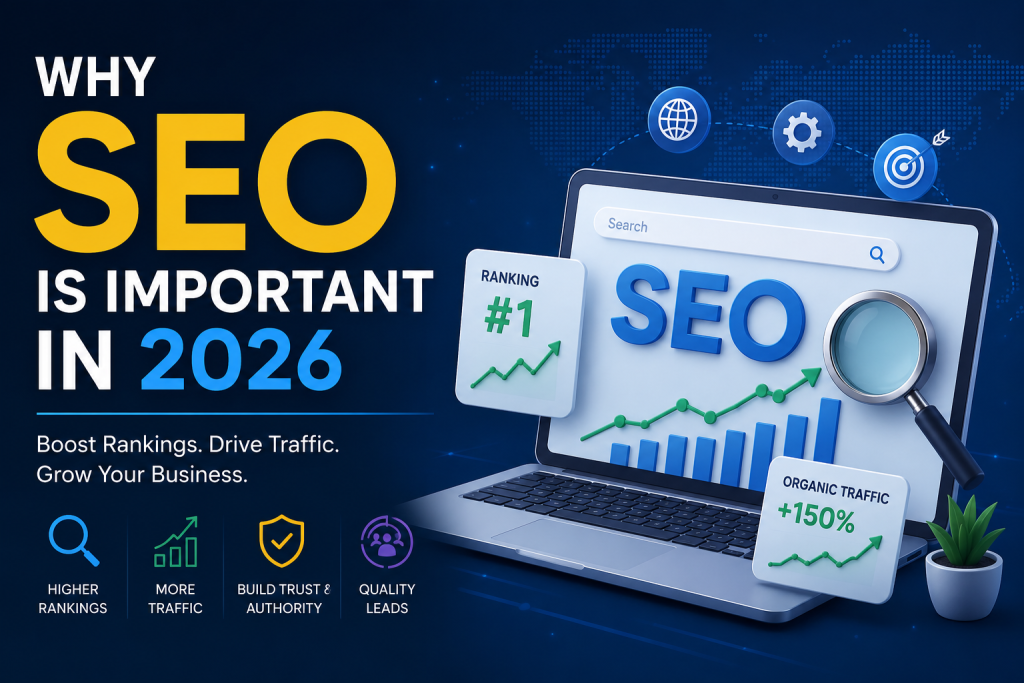
Why SEO Is Important in 2026: The Complete Guide for Businesses

Introduction In 2026, having a website alone is no longer enough to grow your business online. With millions of websites competing for attention, businesses need a reliable strategy to reach their target audience. This is where Search Engine Optimization (SEO) becomes essential. SEO helps websites rank higher on search engines like Google, making it easier for potential customers to find your products or services. As artificial intelligence, voice search, and personalized search experiences continue to evolve, SEO has become smarter and more user-focused than ever before. Businesses that invest in SEO in 2026 are more likely to generate consistent traffic, build trust, and increase sales without depending solely on paid advertising. What Is SEO? Search Engine Optimization (SEO) is the process of improving a website so it appears higher in search engine results pages (SERPs). It includes optimizing website content, improving technical performance, earning quality backlinks, and providing an excellent user experience. The primary goal of SEO is to attract organic (free) traffic from search engines by matching user search intent with valuable content. Why SEO Is Important in 2026 1. Organic Traffic Delivers Long-Term Results Unlike paid advertising, SEO continues to generate traffic even after your content is published. A well-optimized article or landing page can attract visitors for months or even years without additional advertising costs. Businesses that consistently publish high-quality, optimized content enjoy a steady flow of qualified visitors. 2. AI Search Has Changed User Behavior Google’s AI-powered search experiences now provide more intelligent and personalized results. Search engines prioritize websites that demonstrate expertise, authority, and trustworthiness. To rank well in 2026, businesses must focus on:   Helpful content Original information Real expertise User satisfaction Fast-loading websites SEO is no longer about stuffing keywords—it is about providing the best possible answer. 3. Builds Brand Trust and Authority Users naturally trust websites that appear on the first page of Google. When your website consistently ranks for important keywords, customers perceive your business as:   Reliable Professional Experienced Industry-leading Higher rankings improve both visibility and credibility. 4. Better User Experience Improves Rankings Google rewards websites that offer excellent user experiences. Important ranking factors include:   Fast loading speed Mobile-friendly design Easy navigation Secure HTTPS connection Helpful content Low bounce rate A better experience leads to happier users and improved SEO performance. 5. SEO Generates High-Quality Leads SEO targets users who are already searching for your products or services. For example:   Best Digital Marketing Course in Delhi Dentist Near Me SEO Agency for Small Business Buy Running Shoes Online These users have strong purchase intent, making SEO one of the highest-converting digital marketing strategies. 6. Local SEO Is More Powerful Than Ever In 2026, local searches continue to grow rapidly. People frequently search for:   Restaurants near me Digital Marketing Institute Near Me Best Dentist Near Me Website Designer Near Me Optimizing your Google Business Profile, collecting positive reviews, and targeting location-specific keywords help businesses dominate local search results. 7. Voice Search Continues to Rise With smart devices becoming more common, users now search using conversational language. Instead of typing: “SEO Delhi” People ask: “What is the best SEO company in Delhi?” Optimizing content for natural language and frequently asked questions helps businesses capture voice search traffic. 8. SEO Supports Every Digital Marketing Channel SEO complements other marketing efforts by improving visibility across multiple platforms. It enhances:   Content Marketing Social Media Marketing Email Marketing YouTube SEO Google Ads Landing Pages Brand Awareness A strong SEO strategy increases the effectiveness of your overall digital marketing campaign. 9. Higher ROI Than Paid Advertising Paid advertisements stop generating traffic as soon as your budget ends. SEO, however, continues delivering visitors without paying for every click. Although SEO requires time and consistent effort, its long-term return on investment (ROI) is significantly higher than many paid marketing channels. 10. Stay Ahead of Your Competitors Your competitors are already investing in SEO. If your website is not optimized, potential customers will likely discover competing businesses instead. A well-executed SEO strategy helps you:   Increase visibility Generate more leads Improve online reputation Capture larger market share Ignoring SEO means falling behind in an increasingly competitive digital landscape. Best SEO Practices for 2026 To succeed in 2026, focus on these proven SEO strategies:   Publish original, high-quality content regularly. Optimize for user search intent rather than keyword stuffing. Improve Core Web Vitals and website speed. Build high-quality backlinks from trusted websites. Optimize images with descriptive alt text. Use structured data (Schema Markup). Make your website mobile-friendly. Target long-tail keywords. Keep content updated with current information. Improve internal linking across your website. if you want to check other sercives you can click on this link -> SERVICES  Final Thoughts SEO in 2026 is no longer just about ranking higher on Google—it is about creating valuable experiences that satisfy users while meeting search engine standards. Businesses that prioritize quality content, technical optimization, and user experience will enjoy sustainable online growth, stronger brand authority, and higher conversions. Whether you own a local business, an eCommerce store, or a service-based company, investing in SEO is one of the smartest long-term marketing decisions you can make. As search engines continue to evolve with artificial intelligence and changing user behavior, businesses that adapt their SEO strategies today will be the leaders of tomorrow. If you want to check my other services you can click the link forth -> Service Remember: SEO is not an expense—it is a long-term investment that continues to generate traffic, leads, and revenue long after the initial work is complete.

Scroll to Top